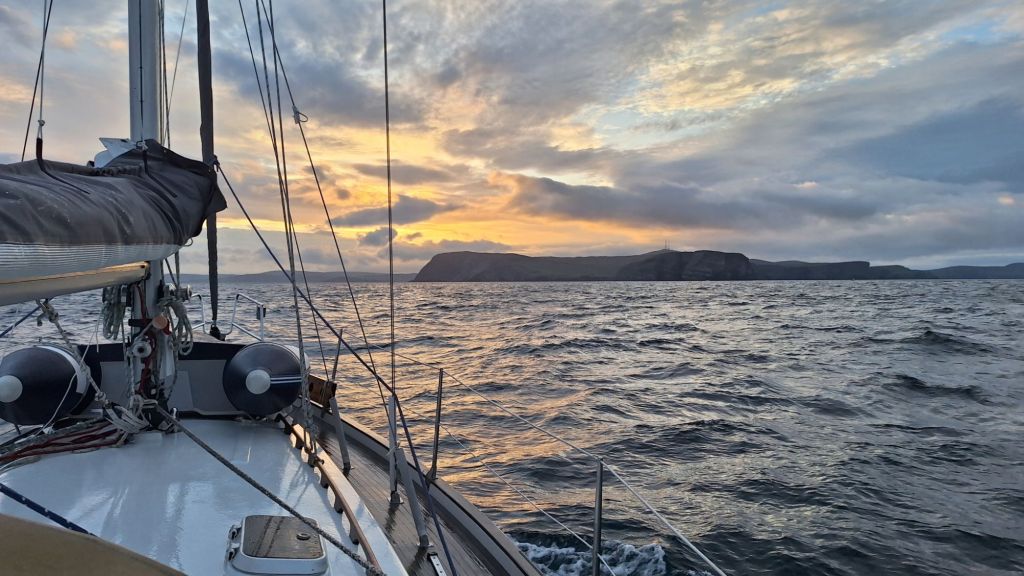
June 15 – 25
The page is quite long, so keep scrolling down.
Go to homepage and menu here.
Saturday June 15
Sailing to Shetland on my own boat has been a plan in the making for the last couple of years, and a dream for longer. For some sailors, this is a trip they may take regularly, and sailing boats and fishing vessels have crossed the North Sea for more than a thousand years. I have crossed the sea two times before, with others, but not as a skipper myself.
It looked like it could happen last year, but the crew had to cancel for reasons of health. Now, however, a long time friend from Shetland, and my nephew, were ready to come. As I have recently retired, I would be flexible with time, and so would my crew. Start date from home was set to June 17, or as soon as possible after that when there would be a suitable weather window.
It turned out that Saturday June 15 would be preferred, arriving in Lerwick before a north west wind would set in. So we had to skip a family gathering and cast off. Such is the life of a sailor! And their families!
Eddie and Rosemary Watt, from Shetland, now living in Scotland, came over for a visit prior to sail off. We first met in Kenya in 1993, when Eddie was a pilot for MAF (Missionary Aviation Fellowship). We had actually discussed the possibilities for this trip for a couple of years, but it was difficult for him to get away from a busy schedule as pilot for Loganair. However, now he had also retired, and we could go. We did a tour of Ryfylke and Hardanger with them first, visiting old friends, also from the time in Kenya.

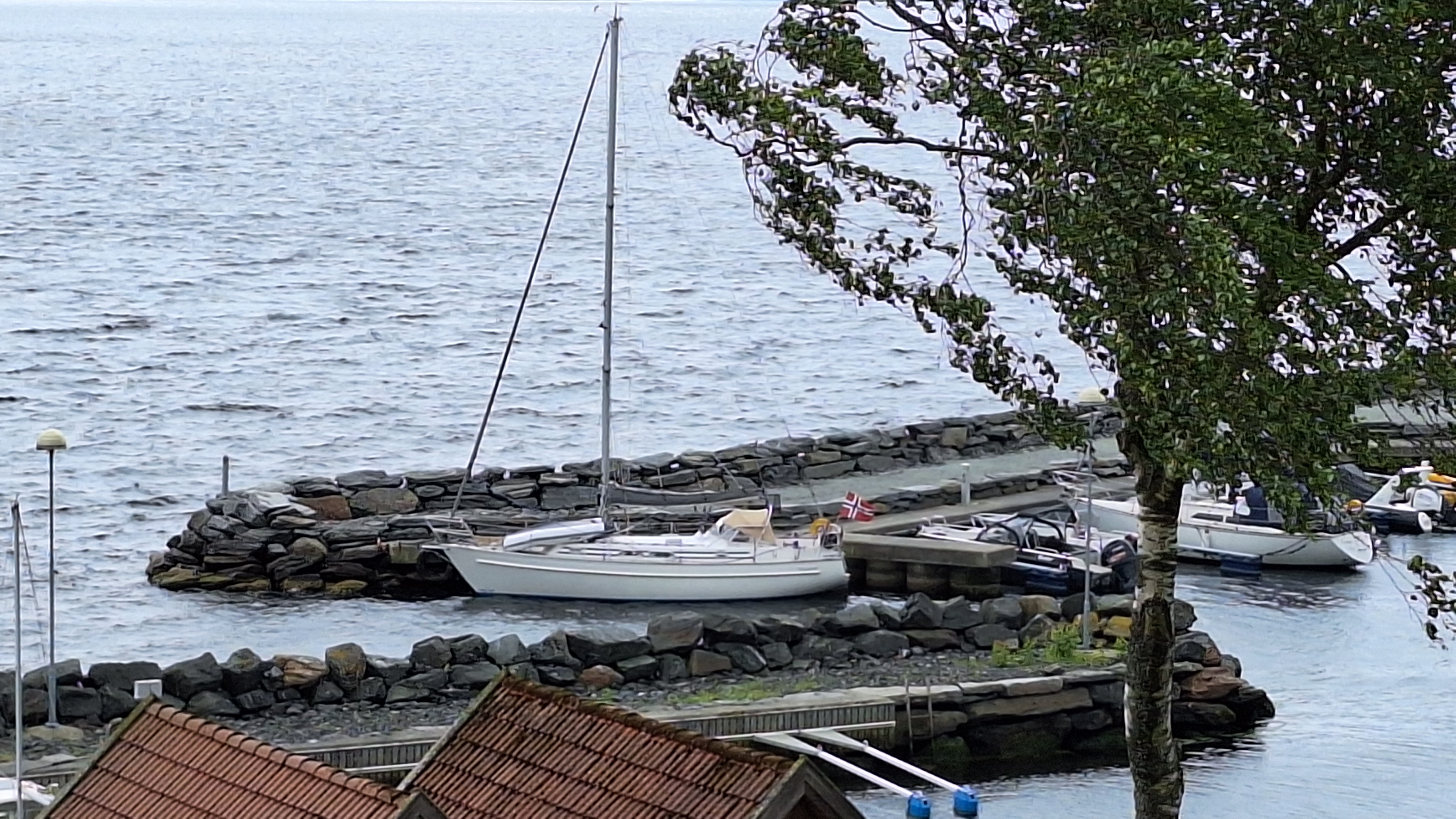

Eddie and I sailed to Haugesund Saturday afternoon, in a good easterly breeze. We did seven knots with the foresail alone, making the 30 nautical mile journey in five hours, including a stop to fill fuel.

Sunday June 16
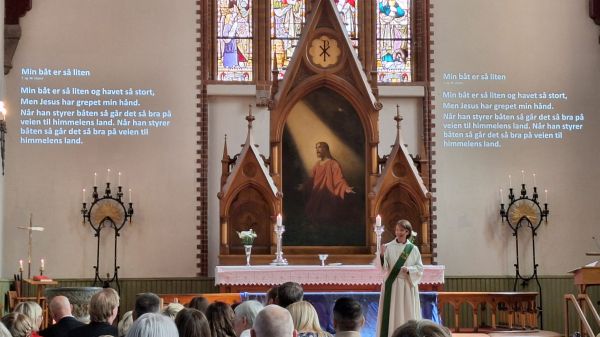
Eddie had to get cleared out of Norway, which was done by a nice officer at Haugesund Police Station. Our departure was set to around 14.00, when Børge would arrive. So before that, we had time to go to church, at Vår Frelsers kirke in town. There was good singing with children taking part in the service. We thought this song was very apt (our boat is so small, and the ocean is wide):
Børge came, and we cast off in bright sunshine and a gentle breeze from south east. Børge is my nephew, an architect and good photographer. He also speaks Spanish, which would have been helpful had not the Spanish armada been beaten back by a northwest gale and the Sir Francis Drake’s cunning in August 1588. You can read more about that here.
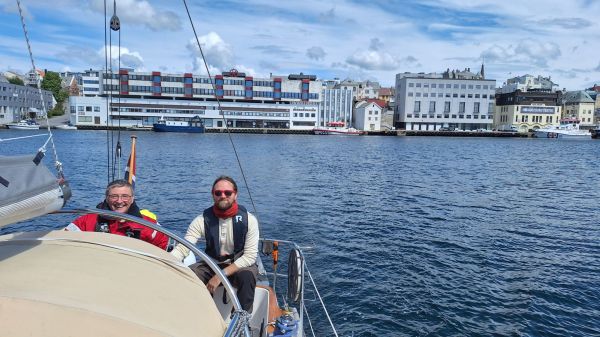
As said above, Eddie retired from Loganair earlier this year. He has lived with his family in Boness, Scotland for the past 20 yeats or so, flying the routes between Scotland, Orkney and Shetland. Born and bred in Shetland (Scalloway) he has had a passion for providing communication to the people on the isles, often fighting against cuts in the services. For this, he was nominated and invited to the King’s garden party in Edinburg on July 2. Therefore, we were eager to get across as soon as there would a possible weather window. By Monday night, we should be in Lerwick, as the wind was going to turn to North East early Tuesday morning.
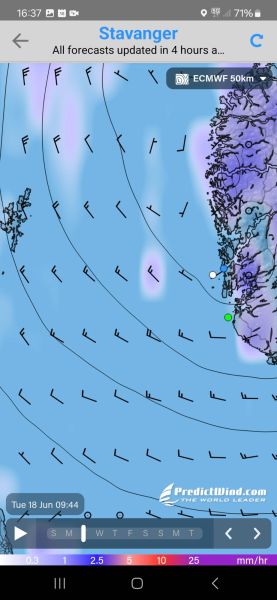
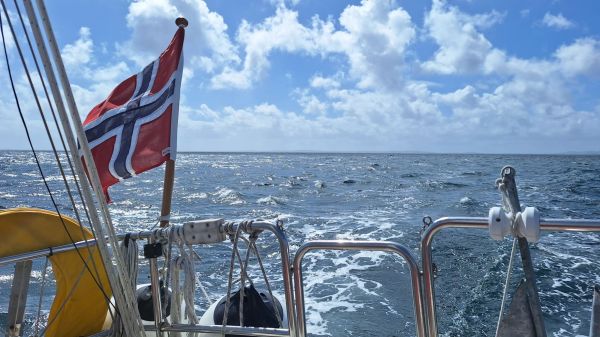
From Haugesund to Lerwick is 200 + nautical miles. The crossing took us 33 hours, at an average of 7 knots, which is good for this boat.
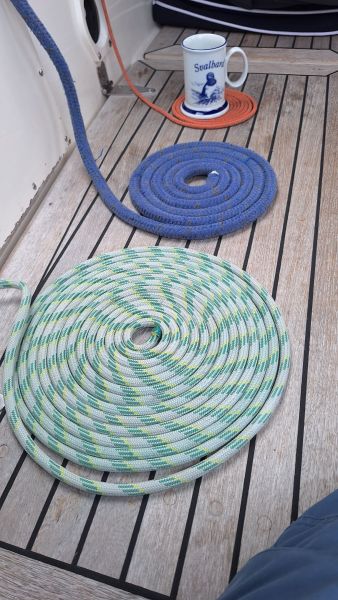
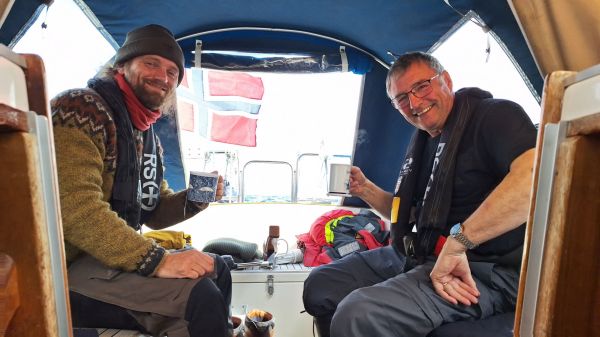
Should say, though, that we motorsailed much of the way, to make sure we would get in Monday night. Which we did, arriving in Lerwick Harbour at 22.30 local time.

In Lerwick we were met by Eddie’s wife, Rosemary, who had flown over in the mean time, and three of their friends.
Tuesday June 18
After being checked in by another nice and service minded officer in Lerwick, we spent the day making ourselves familiar in town. The population of all of Shetland is around 22.000, half of whom live in Lerwick or the near surroundings.
We also visited Lerwick Museum, which has a lot of information on the natural and cultural history of the islands. It would take too long to go into that here, suffice to say that there has been a lot of contact between Western Norway and Shetland, which is evident in the language and geografical names. The people from Norway replaced the native Pict people, who had a different culture and language. It is probably correct to say that the Vikings colonised Shetland from around AD 800.
Fish and chips is a must!
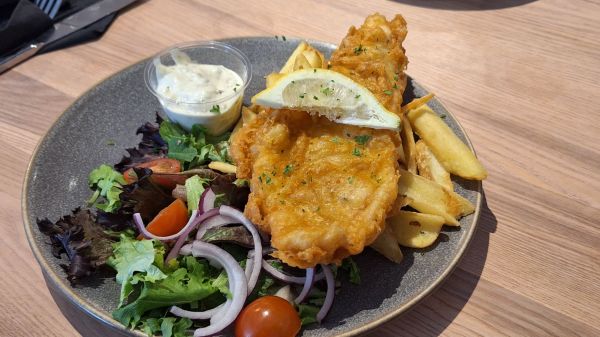
The day was capped off with a visit to a local pub, with live folk music.

Wednesday June 19
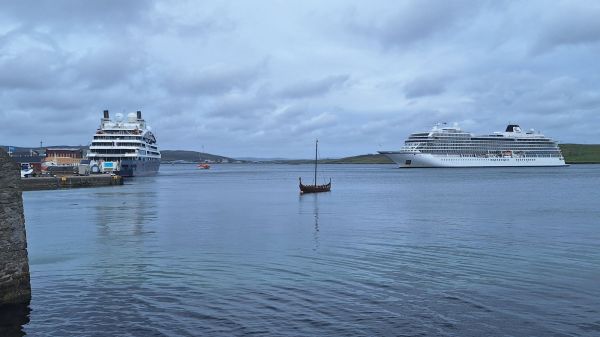
We are not alone here as tourists. Two to three cruise ships come daily. One of them had 150 passengers and 400 crew. Prices start at 8000 Euro per week! It may be a bit more comfortable than on Vestavind, but I don’t think I would swap!
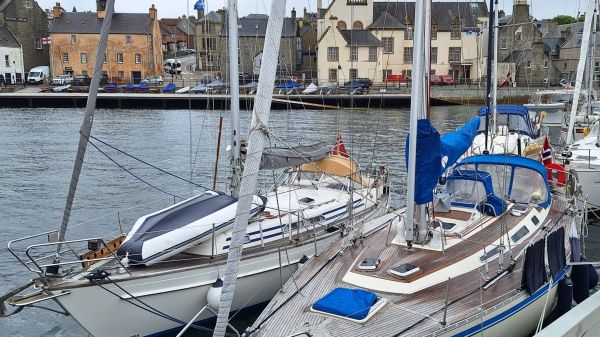
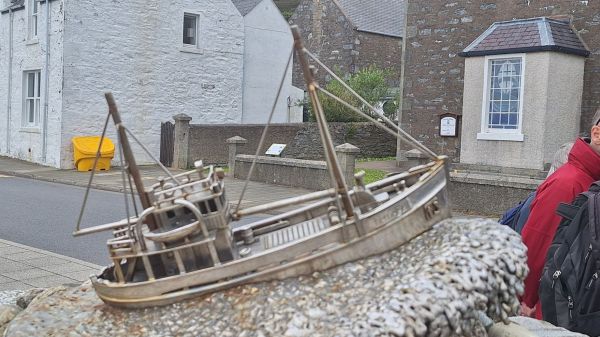
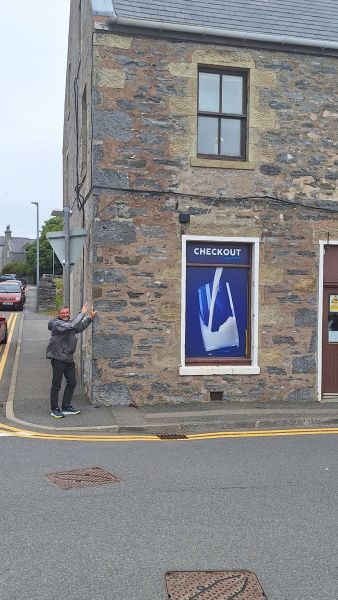
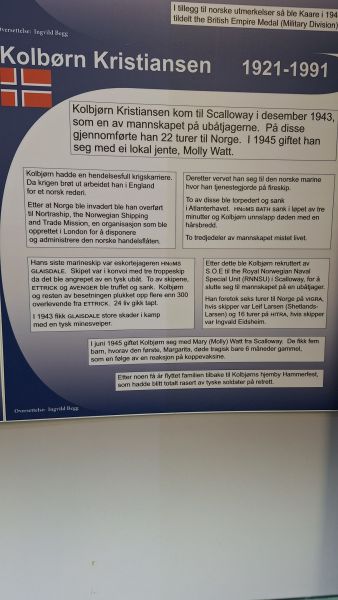
We took the bus to Scalloway and met up with Eddie and Rosemary. She grew up in Lerwick, and Eddie in Scalloway. The house where he was born is close to the place that used to be the headquarters for the Shetland Bus, the operation that carried Norwegians across to Shetland during WW2. There is a good museum in Scalloway too, with a lot of information on the bus. Eddie’s aust Molly married Kolbjørn Kristiansen from Hammerfest. He was part of the Norwegian resistance, making several operations into Norway, at great risk and with some narrow escapes. Here are some glimpses from Scalloway (or Scallowa as they say):


Thursday June 20
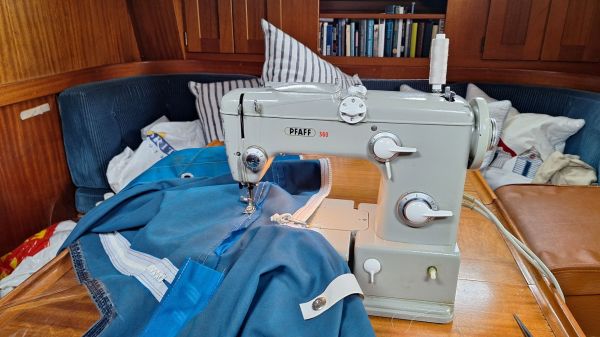
A sewing machine is a must on a sailboat. This Pfaff from ca 1960 is one of my favourites. It has ca 80 different stitch patterns, all mechanical, but I mostly only use straight and zigzag. Some repairs were needed on the sprayhood and the cockpit tent.
Friday June 21
We made the headlines! Shetland Times today:

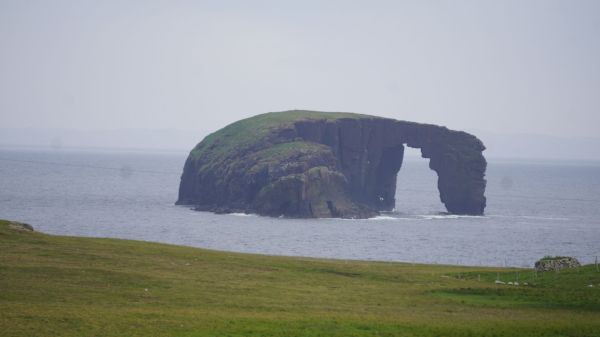
Friday we hired a car to explore the island where we are now. Some highlights were Jarlshoff in the south, and Eshaness in the north west.
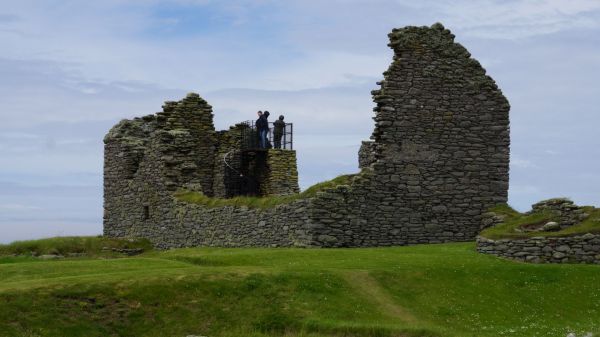
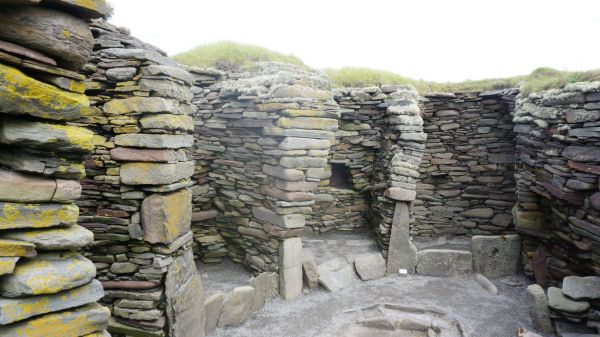
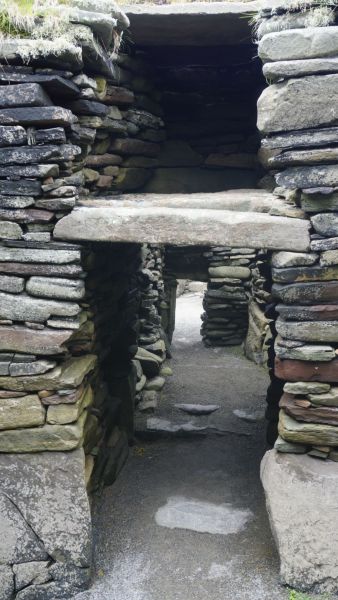
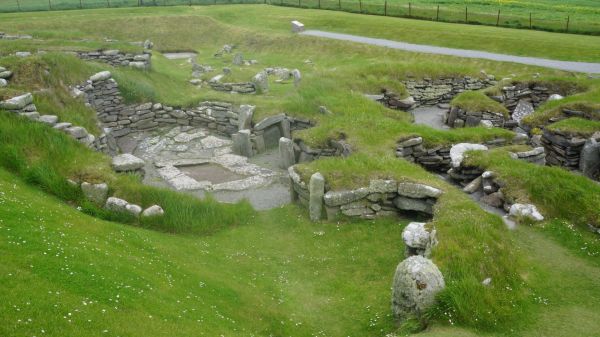
Jarlshoff has had human settlement for at least 4000 years. Remnants were discovered in the late 1800s, when a storm washed away sand and revealed old stone walls.
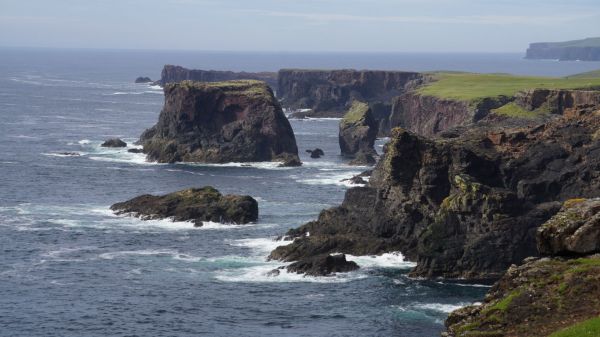
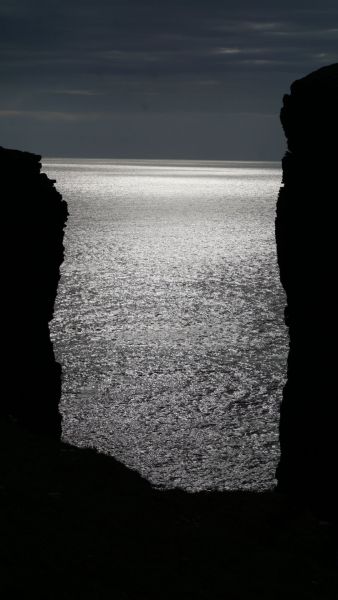
The volcanic cliffs at Eshaness, at the edge of the Atlantic Ocean, inspires awe. We were there on a half sunny day, with a light breeze. Try to imagine how it is when a full storm hits!

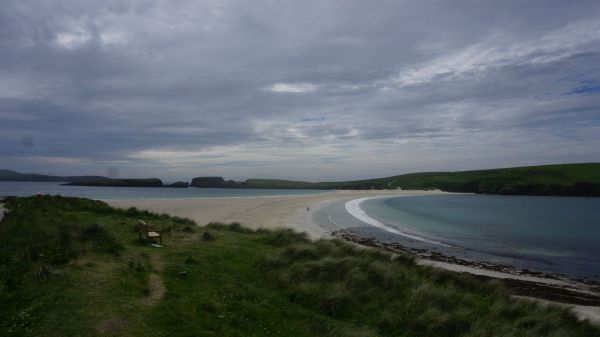
And a must, St. Ninians Isle and beach:
Saturday June 22
Spent the day in Lerwick, doing various things in the boat (cleaning, falling diesel and water, shopping etc).
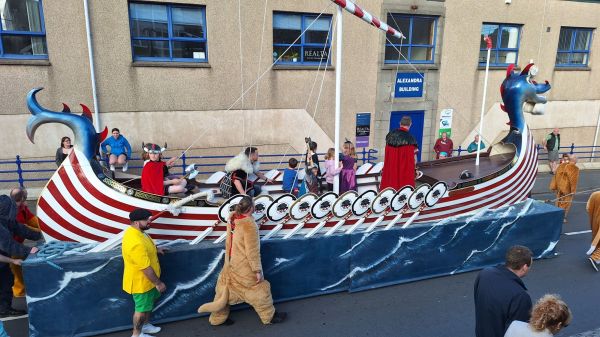
There is a midsummer festival in Lerwick every year. We were lucky to be here this time. The Viking heritage is obviously a key feature. With some newer additions.


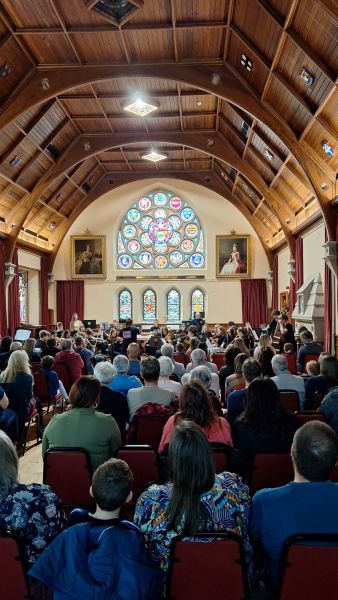
For those with other inclinations, there was a concert in the Town Hall. Young people played a variety of jazz, pop and classic music. There seems to be a good environment for young musicians here. We see that in the pubs, where young people play with older, and here in the hall. Well done by these young people to play, some of them solo, for such a big audience.
Sunday June 23
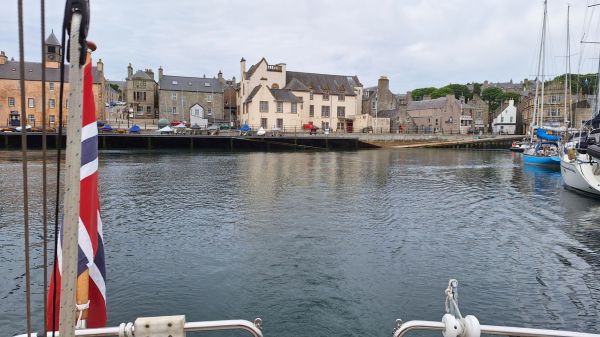
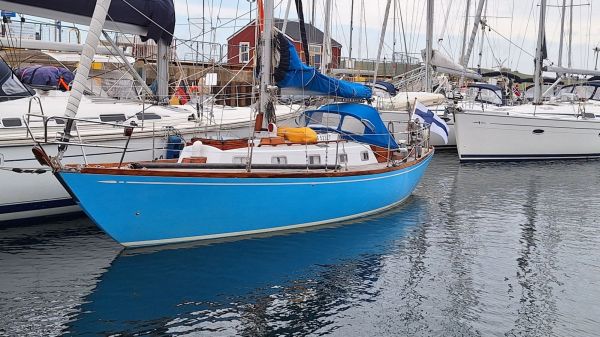
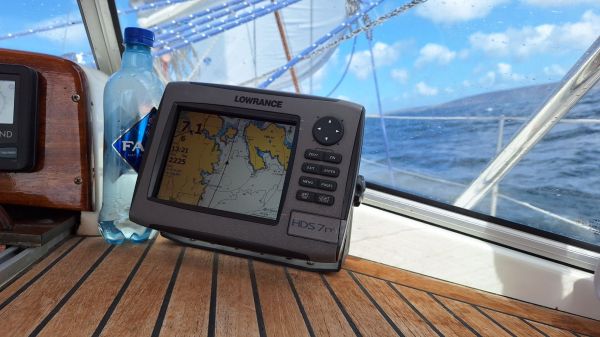
We decided to sail north to Baltasound on the island of Unst (Ønst in Shetlandic). The day was sunny, with a south west breeze coming off the islands. That gave us a good push, and we kept a speed of around seven knots through the water, plus or minus a knot or two as we hit currents going north or south. At one narrow passage, wind and current gave some exitement, but otherwise, the trip was good sailing.
We started from Lerwick at 8, and arrived in Baltasound around 15.30.
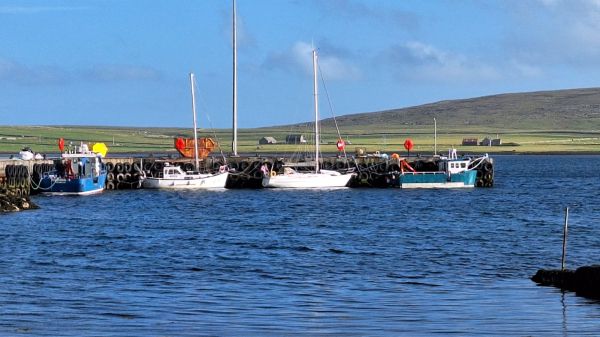
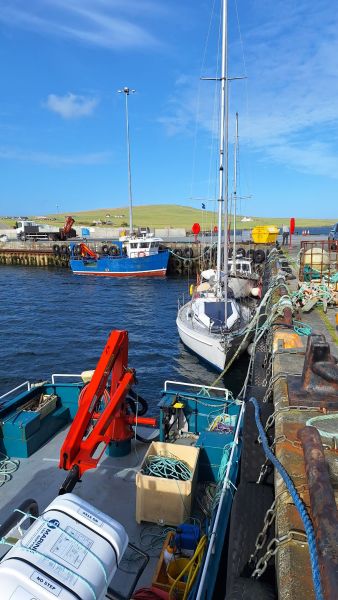
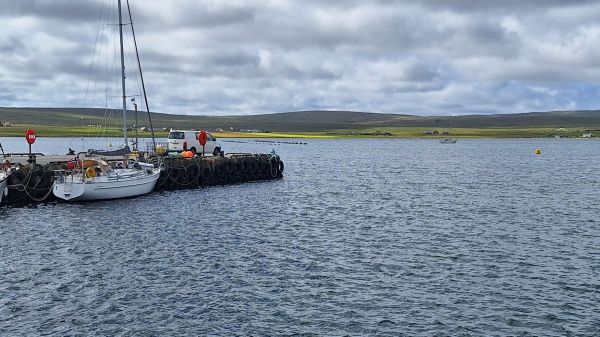
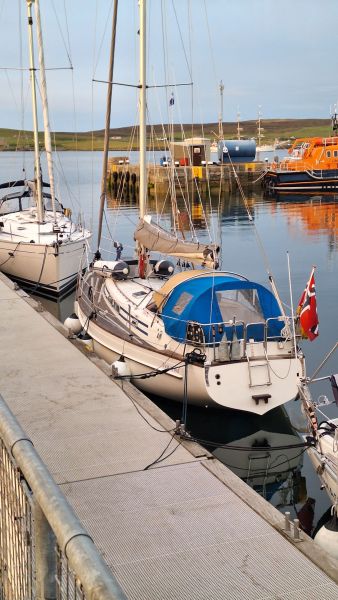
Baltasound does not have a marina. With the help of two elderly men who came down to the pier when we arrived, we tied up behind a strong, solid quay. And that was good, because the wind turned south during the night, and laying on the outside of the pier would have been a bit bumpy.

Monday June 24
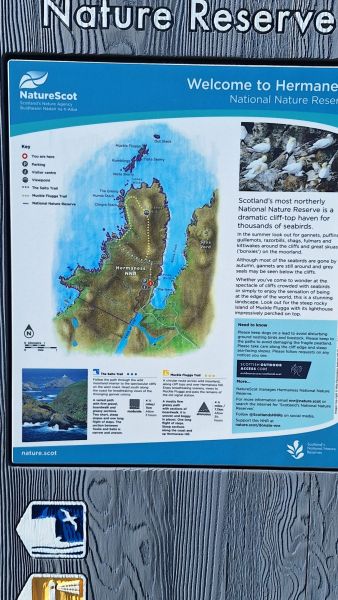
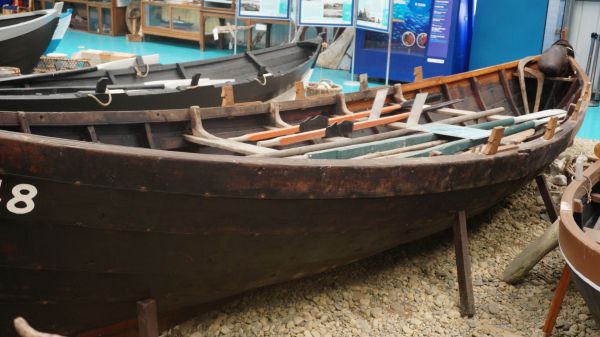
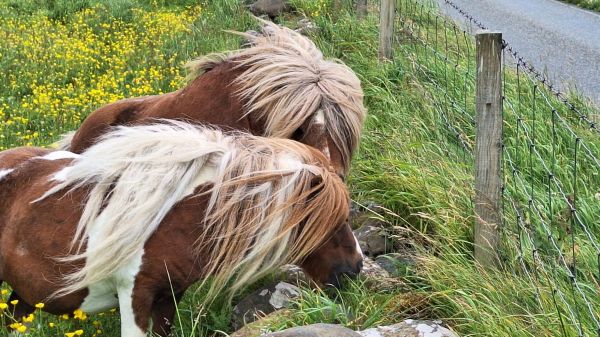
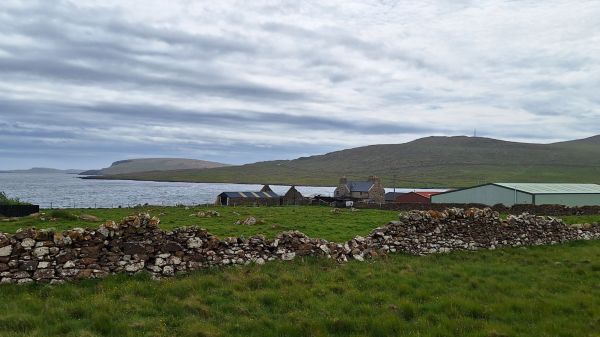
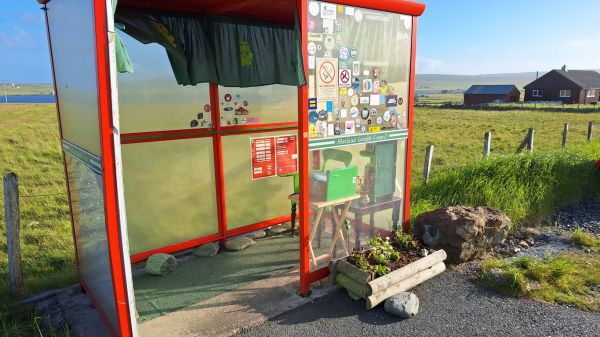
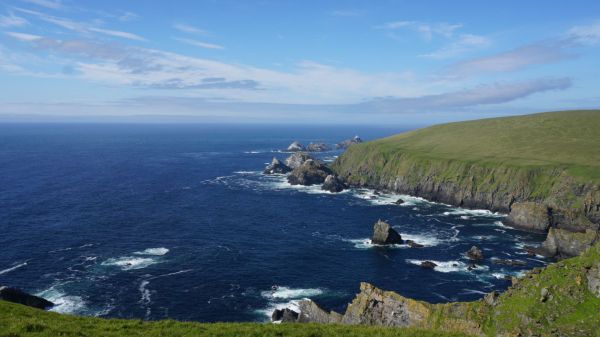
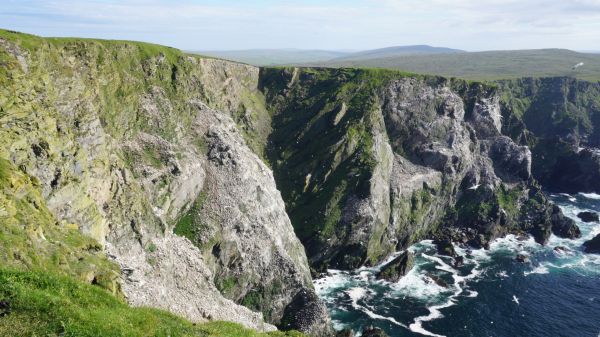
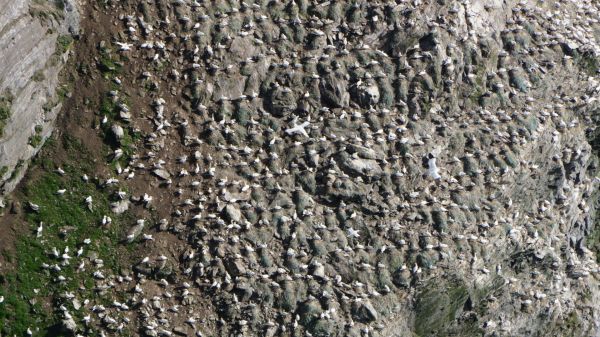
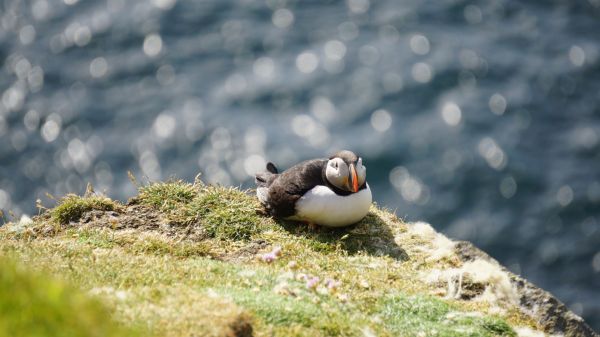
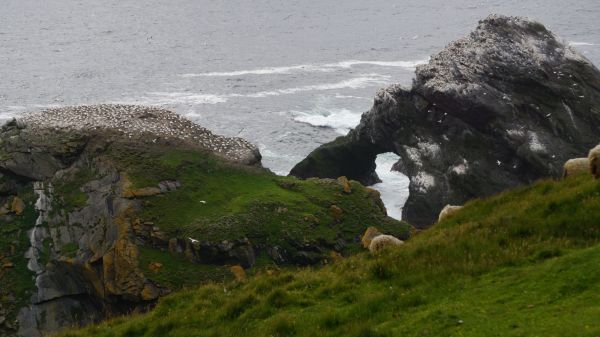
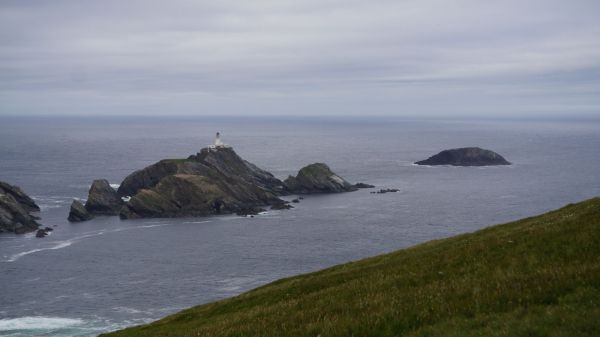
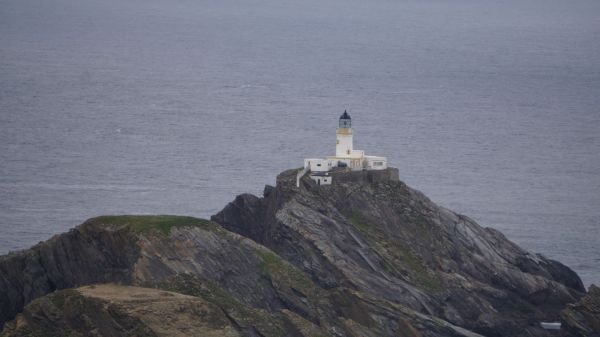
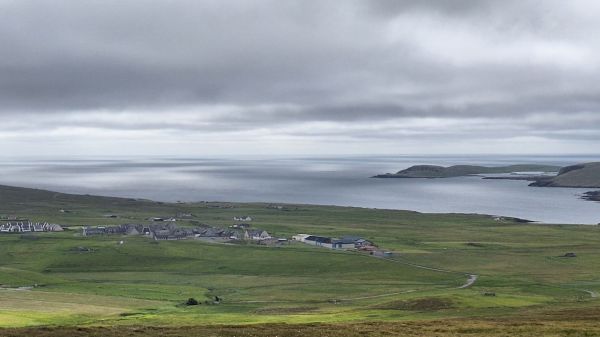
Unst is the northernmost island in Shetland, and in UK. Ca 8 km long, it has around 700 people. Fishing and crofting (small scale farming on rented land) was the way of life for centuries, and the population was much higher in the middle of last century. The school has 82 pupils from 5 to 16, according to the bus driver who took us out to the national reserve at Hermaness on the north west point. Home to 100 000 birds, with a large population of gannets and puffins, but also other species like skua (a kind of eagle), and really breathtaking views of the cliffs and the ocean, it was well worth the three hour hike around the peninsula.
Muckle Flugga, meaning big, steep rock, is the northernmost point in the UK. Muckle, as in old Norse Mykla (Myklagard, big town).
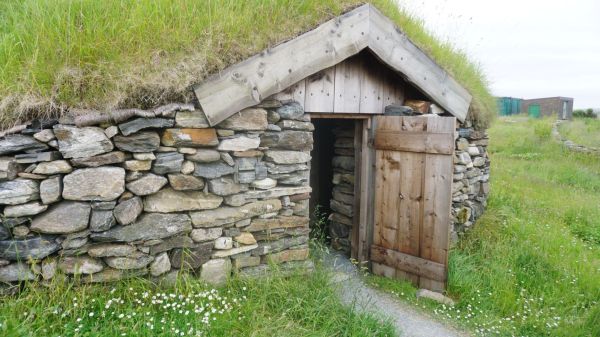
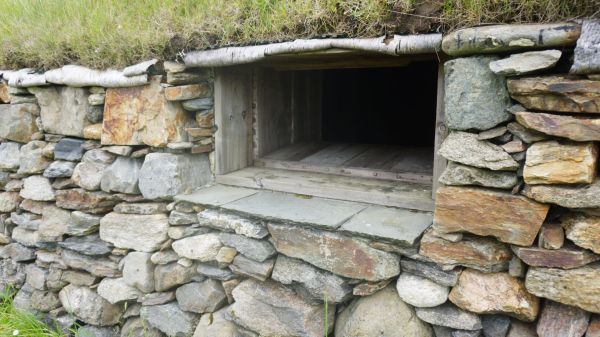
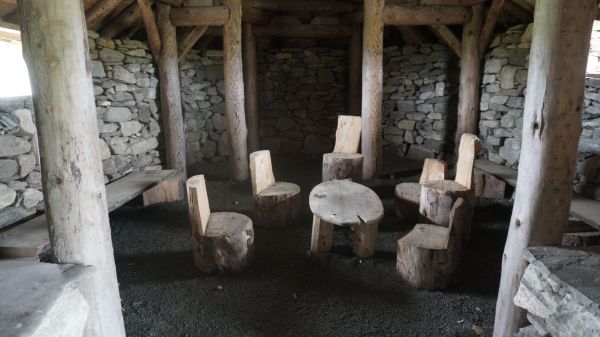
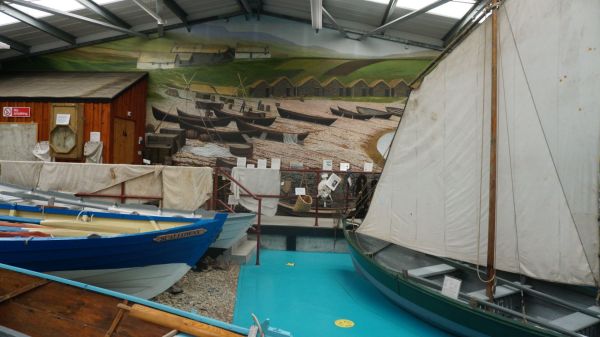
But before that, we visited the replica Viking longhouse and the Heritage Center in Haroldswick.
As we were about to walk out, a man in a camper van said good morning. We stopped to talk to him. He and his wife live in London. He said “I have a friend in Oslo. He is a professor. His name is Hans Kristian Hognestad.” “I know him” Børge replied, “he is from Bryne near where I come from. I used to meet him when I studied in Oslo, and I am going to meet him when get back home!” Well, it’s a small world sometimes. I often wonder when I meet people like this, or accidently meet people I know on the street in a big city, how many more are there just around the corner, whom I might have met if I had been there five minutes earlier?
Well, they took us over to Haroldswick, and we had a nice chat.



Tuesday June 25
The forecast promised good for sailing back to Lerwick in the afternoon. But the day started with fog. Tony, one of the men who met us when we came, took us for a drive up to a viewpoint before we left. By then the fog had cleared. We looked down on the new satellite launch ramp being constructed, from an old radio station used by RAF (Royal Air Force) during the cold war. When we were about to leave, two officials came and told us that we were not allowed to go there. “But you are here” said Tony. “We have authority” they said. There was more exchanges, and I was glad we got away. And yes, there was sign on the road saying “No unauthorised entry”. (I don’t leave a photo of the station, just to be safe.)
Around 12-13 years ago, the Norwegian adventurer Ragnar Thorseth and crew had come to Baltasound in a leaky boat. They needed repairs, and being a naval engineer, Tony had helped them to fix the boat, and had hosted the whole group for a week. They were going to Iceland, but had to give up at the Faeroe islands.
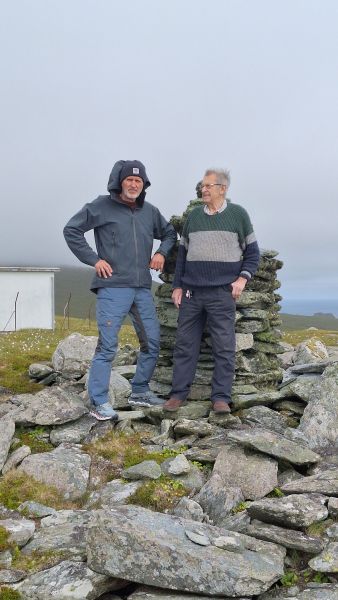
Eddie had told us about his former colleague, Sandra Grey, who lives in Baltasound. Tony showed us her house, which turned out to be just behind the boat club where we were staying. She was home and asked us in for a cup of tea and fruit cake in her kitchen. Her husband was lost at sea 25 years ago fishing for lobster, together with his brother. He was never found. She has seen many changes at Unst, from a time with more people and more social life, to a more quiet athmosphere in recent years. The most lovely woman on earth, says Eddie. I have permission to use her photo here.





 Seil i vestavind/home
4 responses to “Sailing to Shetland 2024 I”
a wonderful adventure, glad we were able to add a little something.
Tusen takk
Fantastisk fin beskrivelse og bilder fra eit spennande Shetland ❤️
Thank you for sharing the journey, having the same boat as you it is always nice to read the journeys and DIY that you do to the boat
Fantastic journey! Thank you for sharing!