
July 19 – 23, 2025
After a busy, but good week at home, we again set course for the south. We had booked train tickets for Saturday 19th, but alas, this time the train was cancelled and replaced by buses. This has happend quite often over the last few years, and the reasons vary. Sometimes the train itself breaks down, or there is a problem with the rails or electric lines, or the signal system. Other times it is because of scheduled maintenace. I used to commute weekly between Stavanger and Kristiansand from 2003 to 2008, and I will say it almost never happened that the train was cancelled, or delayed even a little. The railways used to be owned and operated by a government owned company, NSB, but was privatised in 2017, when a conservative led government took over the management. Since then the NSB has been split up in many private companies, and many will say that railways in Norway has been down prioritized.
However, we arrived at our destination a couple of hours delayed (after some strange bus connections), and Petter picked us up. Thank you again! We left the marina the same afternoon, in beautiful, warm weather, heading east. First stop was shopping in the village of Høllen.
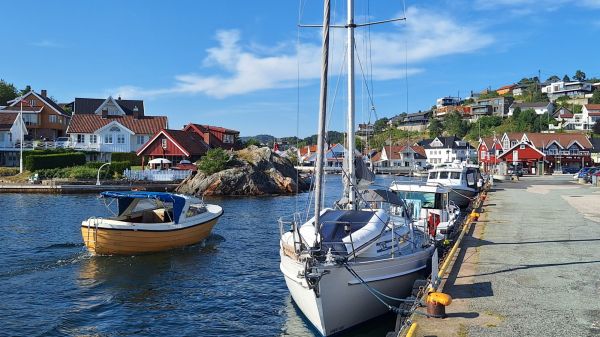
On our way to our next stop, we passed through the narrow sound of Ny Hellesund, which has a side opening into Olavssundet (see provious post). An old fishing community, it is now a popular destination for holiday makers. The old houses are beautifully preserved and the whole passage is a display of traditional coastal culture, turned into exclusive summer residences.
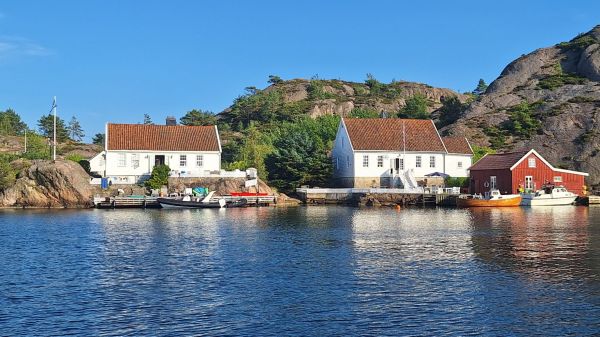
On the south coast of Norway, fishing families used to settle literally on the shore, building their little houses close to the sea. At strategic places, there would also be business centres, which can still be seen in the larger buildings. At the west coast, because of the harsher climate and north west prevaling winds, people built their houses a little inland, between protecting hills, and only had their boat houses at the shore. It was also more common here to combine fishing with small scale agriculture.
We had picked a bay that seemed to provide good anchorage, just before the entrance into Kristiansand, but passing a little island before that, we saw that some other boats had found mooring behind a skerry and this island. With dead calm weather, warm sunshine, and a view out to the open sea, we crept into the narrow sound between the island and the little skerry and tied a bow line to the rocks on the skerry and dropped a stern anchor into the sound behind us.
The evening was beautiful! We had a good dinner, jumped into the warm sea and read books until dark.




Sunday, July 20
The peace didn’t last, however. We were woken at five by the nasty sound of the keel scraping against rock! A breeze had picked up and pushed us towards the skerry. I got out quickly and tried to pull us further out into the sound, but the anchor did not hold. Only one thing to do: get out in the dinghy, pull up the anchor, row further away and drop it again. But this was not enough, it soon appeared. The anchor dragged again. Heavier measures were called for. This time, I took the bow anchor, a 15 kg Bruce with 60 meters of chain, put it carefully into the dinghy, pulled out around 40 meters of chain, rowed as far as I could and dropped it. With this, the bow came away from the shore and pointed better into the wind. Ropes to the skerry had to be dropped and fetched later. This worked. We had a good breakfast and left.
By all means, this was a minor incident. Lin and Larry Pardey were in deeper trouble when they were anchored off a rocky beach on the east coast of USA and were caught in a storm that blew them towards the shore. Only a good anchor and a long chain and rope kept them from disaster. They did not have an engine to save them.
It appeared that the bottom where we anchored was covered by sea weeds. A good thing for marine life, but a disadvantage for anchoring. The best holding is soft mud or clay. Then the anchor will dig in deep.
Our day was beautiful, though. On the west side of Flekkerøy there is an open bay with good holding and shelter from easterly winds (Biskopshavn), which we had now. We anchored, had lunch and jumped into the sea.
We had found out about a little marina, belonging to the local sailing club, before reaching Kristiansand. They have a few spots for visiting yachts, and the price is one third of the prices in town. There was no other visiting boat when we came, and we could pick the best place, alongside a wooden jetty.
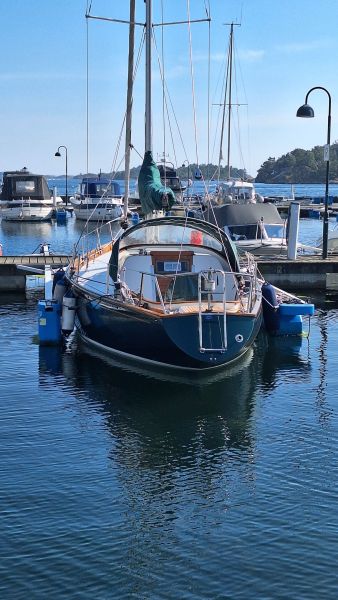
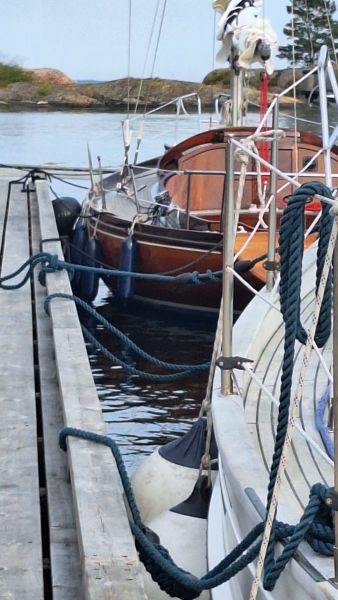
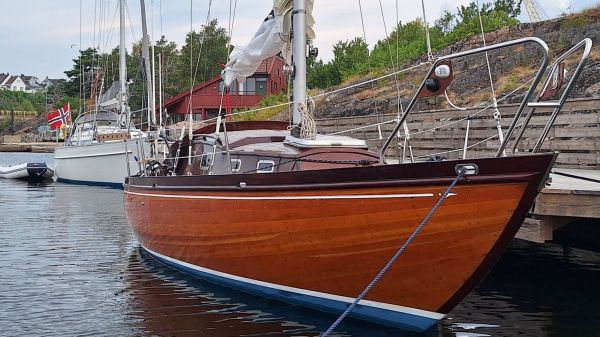
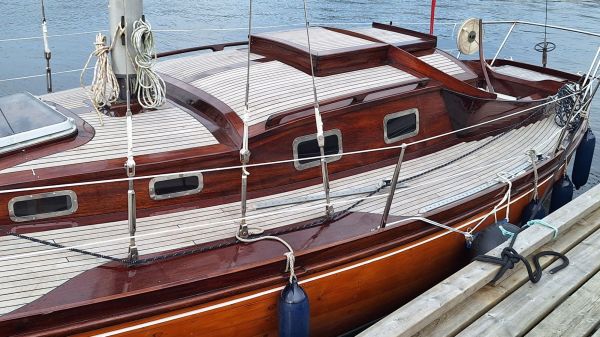
Soon after we had our ropes sorted, a little wooden yacht came in and tied up in the front of us. All washed teak, shiny mahogany and pine. It turned out she was built in 1968, by a design from a well known Norwegian naval arcitect, Sigurd Herbern. Now she had her first sail after a six year restoration. One of the crew members, Bjørn, was chairman of the sailing club. He gave us the code for the club house, so we could find water to fill our tanks and for showering on the pier.
We decided to stay for a few days. The bus to town starts from just up the hill, and there is a naval historic museum a few hundred meters away, and another WW II fort a few kilometers away.


Monday to Tuesday, July 21 – 23
The museums were worth the visit and time we spent there. There is a dry dock just behind the sailing club, where we are tied up.
Bredalsholmen Shipyard (Bredalsholmen dokk) was established in 1876 and was in commercial use until 1990. Now a shipyard and preservation centre, many old craft techniques used in building steel ships are kept alive here.


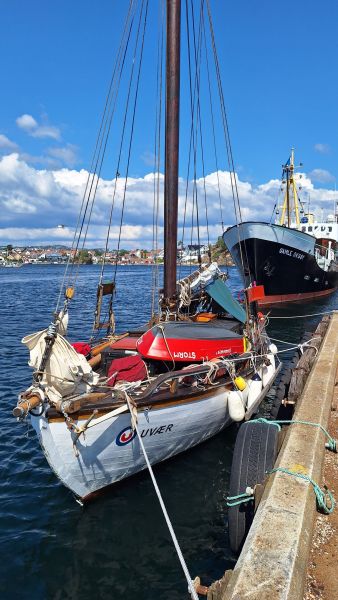
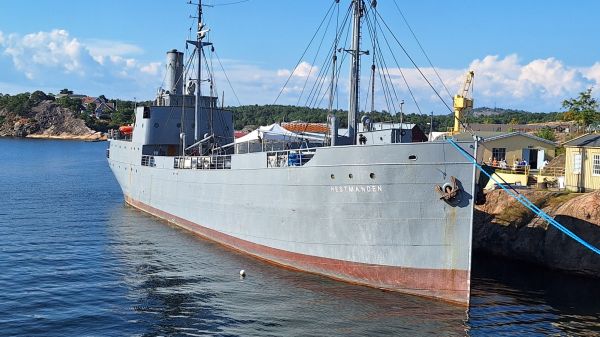
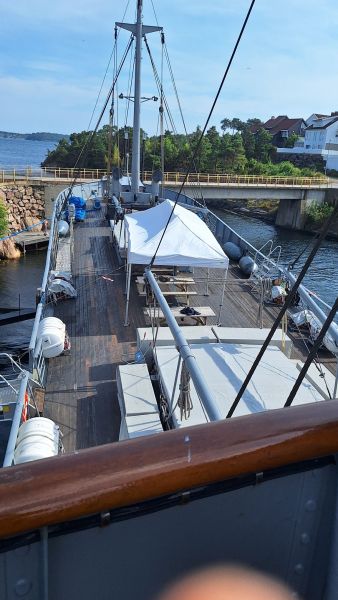
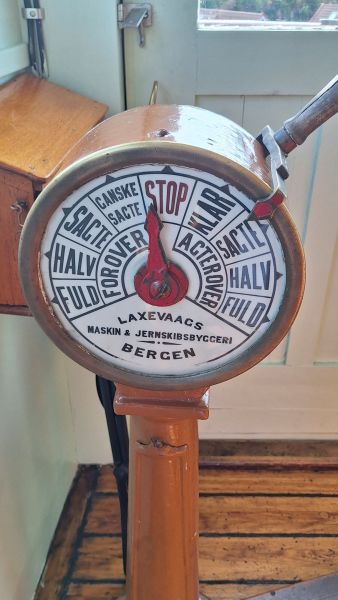
One of the ships that have been fully restored at the dock is the Hestmanden. Launched in 1911 as a combined passenger and freighter ship, she made service along the Norwegian coast. In both world wars she was commisioned to serve the allied forces, together with many other commercial vessels. In WW II, the Norwegian government in London, decided that all Norwegian commercial ships outside of German controlled waters should be part of a company owned by the government, Nortraship, and serve the allies. 1000 ships made up the fleet, of which around half was torpedoed and sunk by the German navy. Hestmanden survived both wars and was deemed a lucky ship. Saved from being scrapped in the 1990s, she is now a floating museum of the convoi traffic across the North Atlantic and in the north.


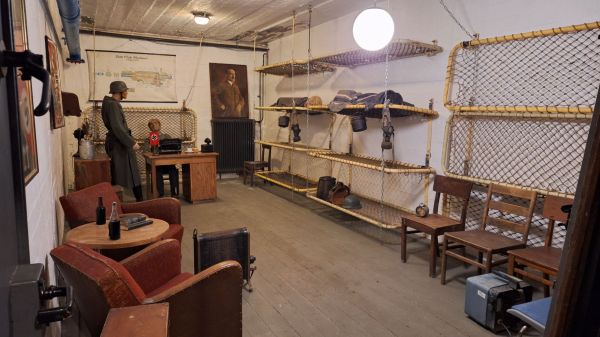
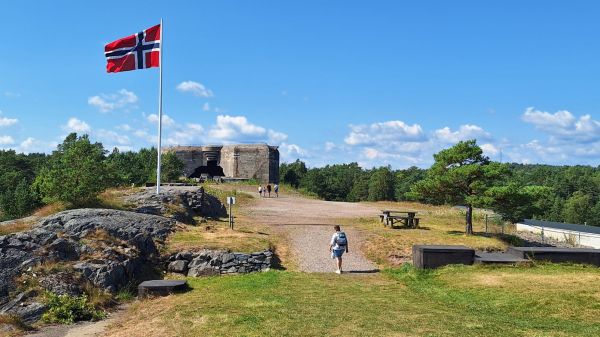
Møvig Fort, on the point south west of Kristiansand, was a strategic installation by the German forces. Combined with another fort on the north coast of Denmark, they could practically block the sea between the countries, and so control all traffic to the Baltic Sea. The big cannons were never used in combat, showing that it worked, as a museum guide said.
The dimensions and resources spent, and the technologies at the time are impressive. The idea of Hitler and his war mongers was to subject the whole north region under their rule (in addition to the rest of the world), to control resources that they wanted to have to build their Third Reich. The fort gives a glimpse of the crazyness of mad men with power! And the stories from people who took part in the convoi traffic show how destructive and tragic war is. How good a place this world would be if we only could live in peace with each other!




 Seil i vestavind/home